 (65) 6779 9272
 sales@tisinstruments.com
 China Partner

Pressure Calibration Guides & Resources
Practical guides on pressure calibration from the engineers at TIS Instruments, a Singapore manufacturer of calibration instruments since 1999. Each guide answers a common question – what a calibrator is, how to calibrate a gauge, how accurate your reference needs to be – in plain language with worked examples.
Latest Articles
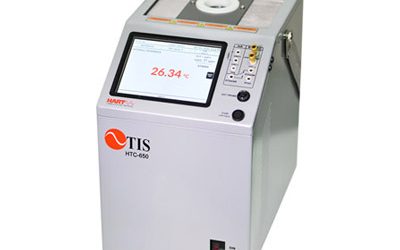
Dry Block vs Liquid Bath Temperature Calibrators
Dry block or liquid bath temperature calibrator? Compare portability, stability, uniformity, probe sizes and temperature range to pick the right one.
read more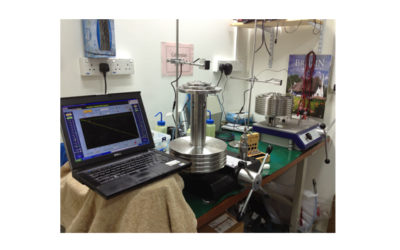
Deadweight Tester vs Digital Pressure Calibrator: Which Do You Need?
Deadweight tester or digital pressure calibrator? Compare how they work, accuracy, speed, portability and calibration, and which one suits your lab.
read more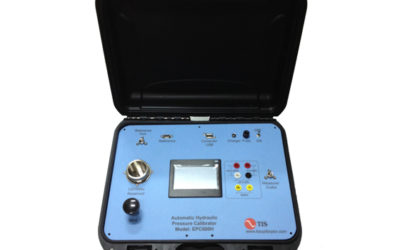
Hydraulic vs Pneumatic Pressure Calibration: Which Should You Use?
When to use hydraulic or pneumatic pressure calibration: ranges, safety, cleanliness, stability and equipment for each, with a quick decision table.
read more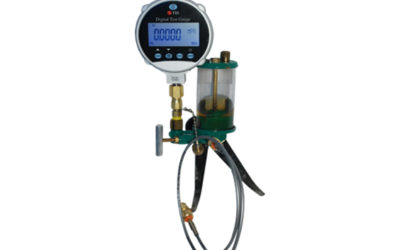
How to Calibrate a Pressure Gauge On Site: A Field Guide
How to calibrate pressure gauges in the field: portable kit checklist, safety, comparison method, recording results and when to send gauges to a lab.
read more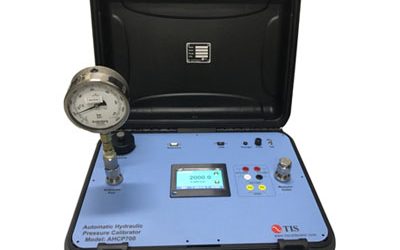
How to Calibrate a Pressure Transmitter (4–20 mA): Step by Step
Step-by-step guide to calibrating a 4–20 mA pressure transmitter: equipment, loop power, test points, error in % of span, zero and span adjustment.
read morePressure Calibration Guides
What Is a Pressure Calibrator? Types, Accuracy and How to Choose
A pressure calibrator is a reference instrument used to check gauges, transmitters and switches. Learn the main types, accuracy rules and how to choose one.
How to Calibrate a Digital Pressure Gauge (Step by Step)
Step-by-step guide to calibrating a digital pressure gauge with a reference gauge and hand pump: equipment, test points, error calculation and intervals.
Automatic vs Manual Pressure Calibrators: Which Do You Need?
Compare automatic and manual (hand pump) pressure calibrators: how each works, speed, repeatability, cost and when each one makes sense.
What Is SINGLAS Accreditation? Calibration Certificates for ISO 9001 Audits
SINGLAS is Singapore’s laboratory accreditation scheme under SAC. Learn what an accredited calibration certificate shows and when you need one for ISO 9001.
Low Differential Pressure Calibration: Challenges and Best Practice
Why low differential pressure calibration (Pa to a few kPa) is hard, and how to get stable, accurate results for cleanroom, HVAC and DP transmitters.
Electric Pump vs Hand Pump Pressure Calibrator
Electric pump or hand pump pressure calibrator? Compare effort, speed, field use, cost and pressure range to choose the right calibrator for your work.
Pressure Transducer vs Transmitter vs Gauge: The Differences Explained
What is the difference between a pressure transducer, a pressure transmitter and a pressure gauge? Outputs, accuracy, uses and how each is calibrated.
How Often Should Pressure Instruments Be Calibrated?
How often to calibrate pressure gauges, transmitters and calibrators: typical intervals, what ISO 9001 says, and how to shorten or extend an interval safely.
Pressure Accuracy Explained: % FS, % of Reading and the 4:1 Rule
What does 0.025% FS mean? Learn the difference between % of full scale and % of reading, uncertainty, and the 4:1 rule for choosing a pressure calibrator.
Pressure Units Guide: bar, psi, kPa, MPa, inH₂O, mmHg and More
Pressure units explained with a conversion table: bar, psi, kPa, MPa, mbar, inH₂O, mmH₂O, mmHg, inHg and kg/cm², plus gauge vs absolute pressure.
Need Help Choosing Equipment?
Talk to our engineers about your instruments, ranges and accuracy.